Tag Archives: Culture

Uganda Week 1

Week 1


After leaving my home Saturday afternoon, and traveling for 38 hours, I finally reached Jinja on Monday night.  I’ve been wanting to call this my pilgrimage since I found out I received this research fellowship through the Buffett Institute at Northwestern. Not because of the strenuous initial journey to get here, but because of the immediate and unforeseen implications this trip will have on my life and life trajectory.

I’ll be constructing and helping to implement a waste management system for the Bugembe Town Council, which has 33,000 residents, solely recommended by my own research. At 18 and while pursuing degrees in Journalism and Sociology, I’ll have grown men, with business and engineering degrees, gawking at my words and backing my decisions– I understand how backwards and ridiculous this is. I had planned to stay away from the pseudo eco-tourism that a lot of us college students partake in during the summer, and still hope to, but I now see how hard that is when working with universities and other institutions.

This slideshow requires JavaScript.


Kakira

I’m staying in Kakira a small town in the Bugembe Town Council, which is right outside of the much bigger Jinja Town. Kakira is an entirely gated town as it lies on the land of  Kakira Sugar Works factory, a multi million dollar company that follows all the bureaucratic rules of any transcontinental entity, no matter its location (bordering one of the poorest slums in Uganda). I feel like economic inequality follows me everywhere I go and has become so apparent in my life and my awareness after my first year at NU, but I know it’s not following me. It’s just everywhere and in every capitalistic state. However, from my short observations, it doesn’t seem to affect daily life as much as it does in the US. This could be because it’s not as drastic as in the US– here you’re either poor or really poor (in terms of global wealth), and the way of life seems much more purposeful. You have your role, and you do it. That is up to your interpretation in comparison to life in the US.

Being Black

I’ll never stop being Black, so it’ll never stop being an issue. I’ve come to the realization (at this point in my life)  that it is honestly hard being Black anywhere on this planet. In the US, you are backtracked and stopped in your tracks by the institutional racism that hasn’t been capped or even truly combatted since this country’s creation. And from what I’ve been told, in European and Asian countries, you’re seen as an exhibit in a museum– met with stares and awkward touching. In Africa, at least in my experience as a lighter-skinned Black person, you’re met with looks of confusion. My Chinese colleague has been met with smiles and ecstatic greetings, while I’ve often been ignored, which isn’t necessarily a bad thing at all, but telling nonetheless. A lot of people think I’m Muslim and East-Asian, definitely a new one, but I can’t blame them. Our country has failed to teach the atrocities and true history of slavery, so how can I expect Africans to believe that I’m supposedly  one of them. The only difference is– I have generations of my family’s colonizer’s blood flowing through my body. Coincidentally, as I’ve been here I began reading the Autobiography of Malcolm X, and have had to combat his early Back to Africa beliefs. America isn’t ours, but Africa really isn’t either. Especially in a contemporary sense, after my week here, I’ve seen how impossible an African-American integration into Africa would be. The roots of our cultures may be similar, but not enough to bridge the intense culturally and psychologically gaps that separate us.

But to end this on a good note, my host family is amazing and they have two little children that I love. That is all, see you next week and Brazil is winning the World Cup.
Developing Community within the Black community at Northwestern University


Is there a singular Black experience at NU?

A generic  placeholder image

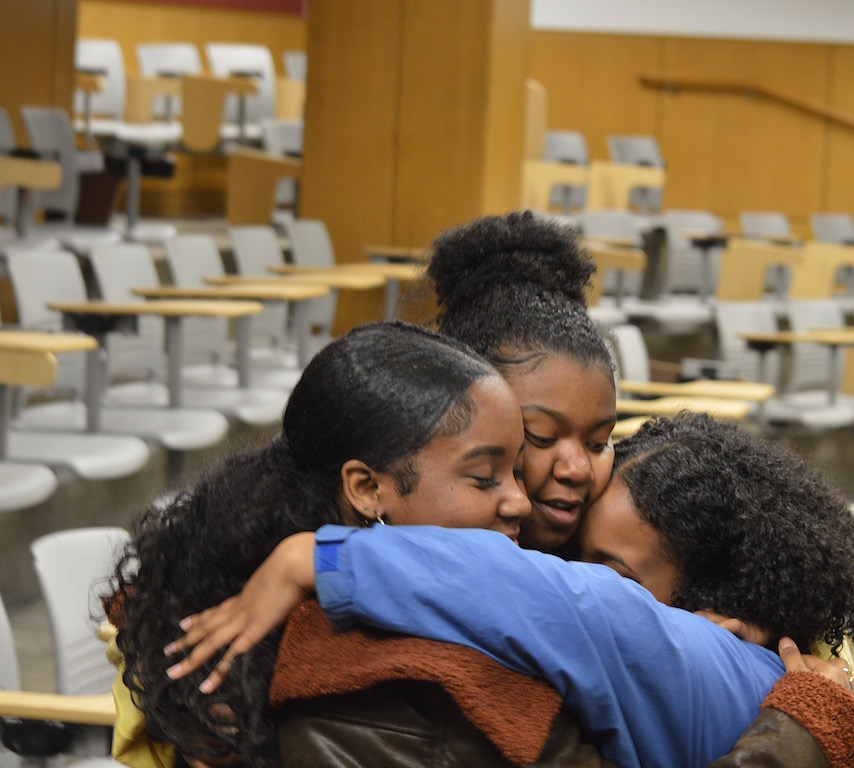
First-year students Symone Jackson, Sannah Boyd and Salina Tsegai embrace in a group hug, on April 24, 2018, inside of Northwestern University’s Technological Institute. Although the event,”Real Talk: Fragmentation in the Black Community”, was meant to highlight the issues within the Black community at NU, it turned into a space for Black students to highlight their “blackness” and support for each other.

“Real Talk” is a series of dialogues hosted by FMO’s first-year executive board. This event,”Real Talk: Fragmentation in the Black Community”, was an opportunity to dialogue about the various divisions and fragments in the Black community at Northwestern.

Our Black is Beautiful!


Mari Gashaw, Freshman Executive Board

A generic  placeholder image

“Real Talk” board members Nelson Okunlola and Taylor Bolding engage with the growing crowd before the room change. The event was planned by the Freshman Executive Board of NU’s Black student alliance “For Members Only” and was initially held in a small classroom before being moved to a bigger venue in Lecture Room 2.

A generic  placeholder image

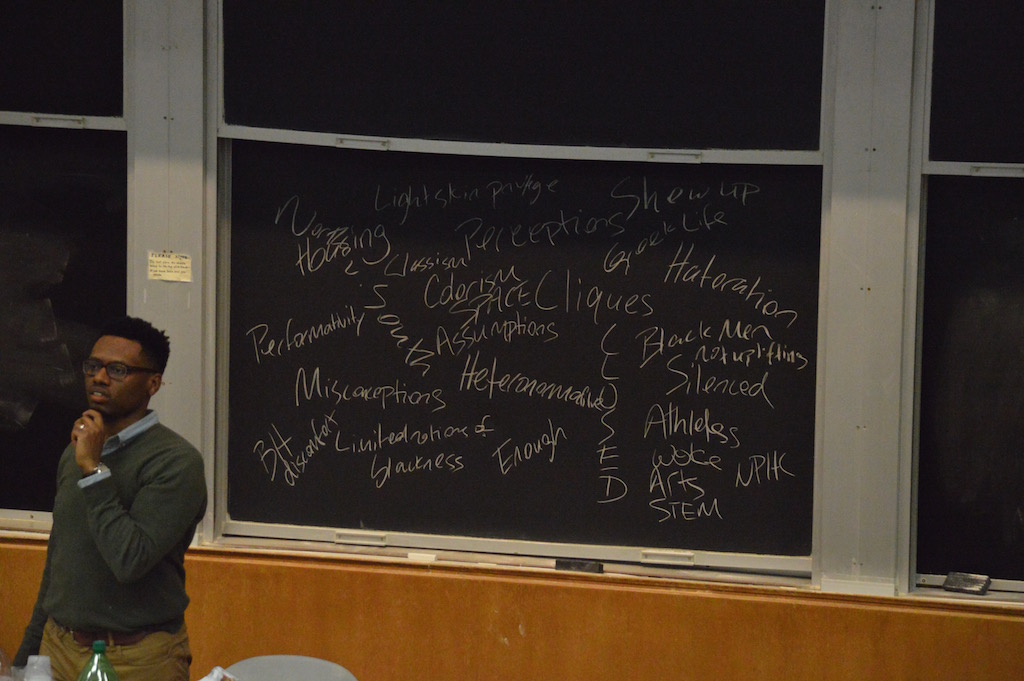
After the room change, facilitator Robert Brown, Director of Social Justice Education at Northwestern University, begins an exercise meant to establish the issues (listed behind him) within the Black community at NU.

This “Real Talk” event was meant to be a safe space for Black students to voice both their struggles and triumphs within the community, while featuring voices and identities that may be normally silenced on NU’s campus.

A generic  placeholder image
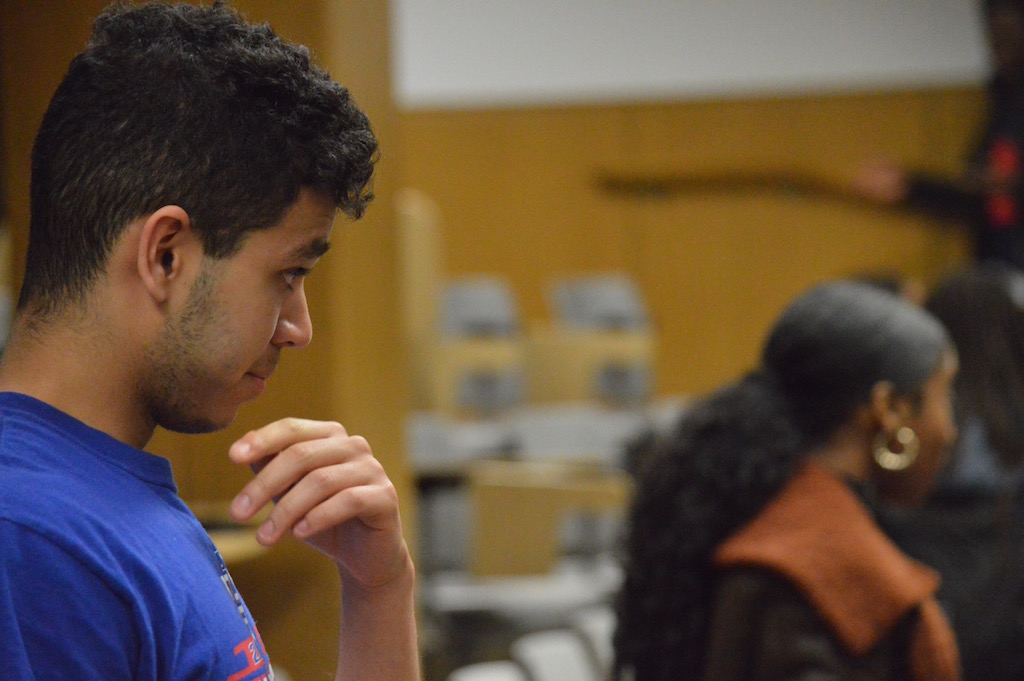
Rohan Gupta, a mixed-race first year student at NU, reflecting during one of the individual exercises of the night. For some students, this event served as a space for reflection, as they contemplated their personal experience within and outside of the Black community at NU.


A generic  placeholder image

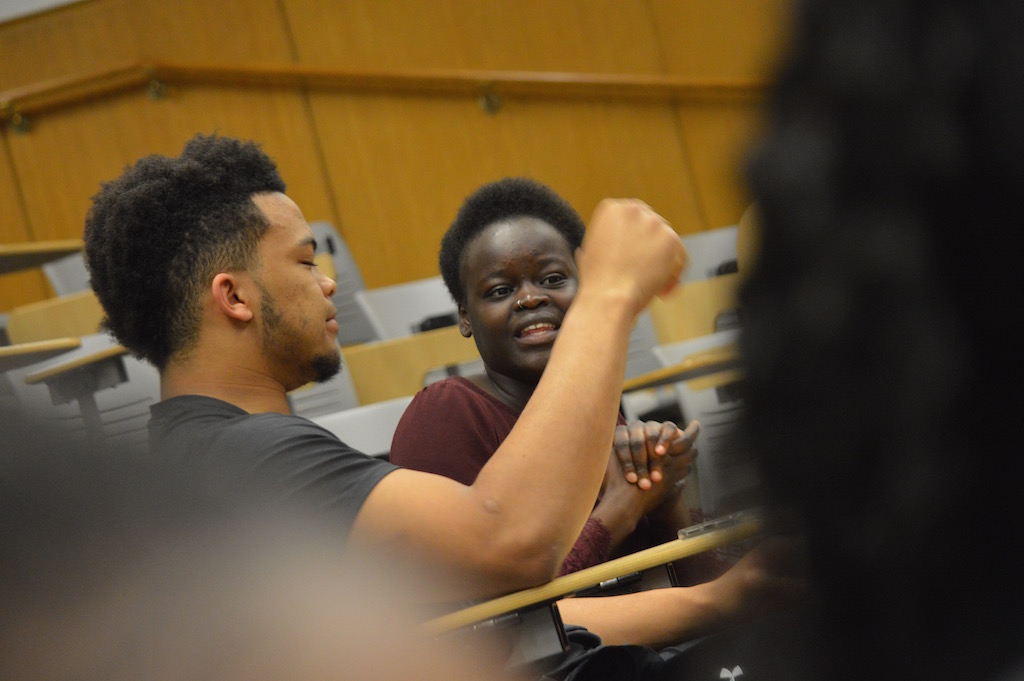
First-year student-athlete Earnest Brown and first-year student Emma Evans, are seen discussing the misconceptions found between Black student-athletes and non-athletes on campus.Students were able to voice their frustrations within the community to their peers.

A generic  placeholder image

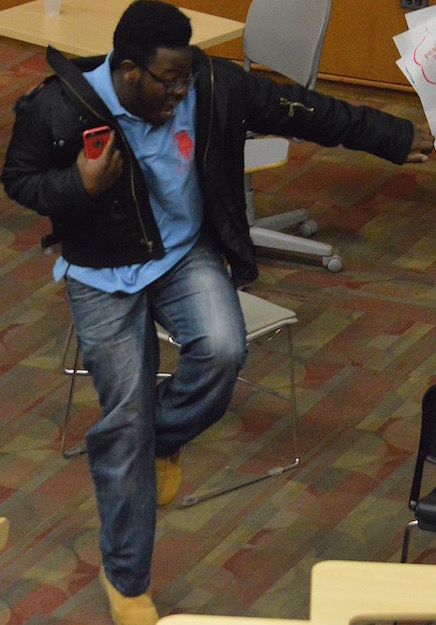
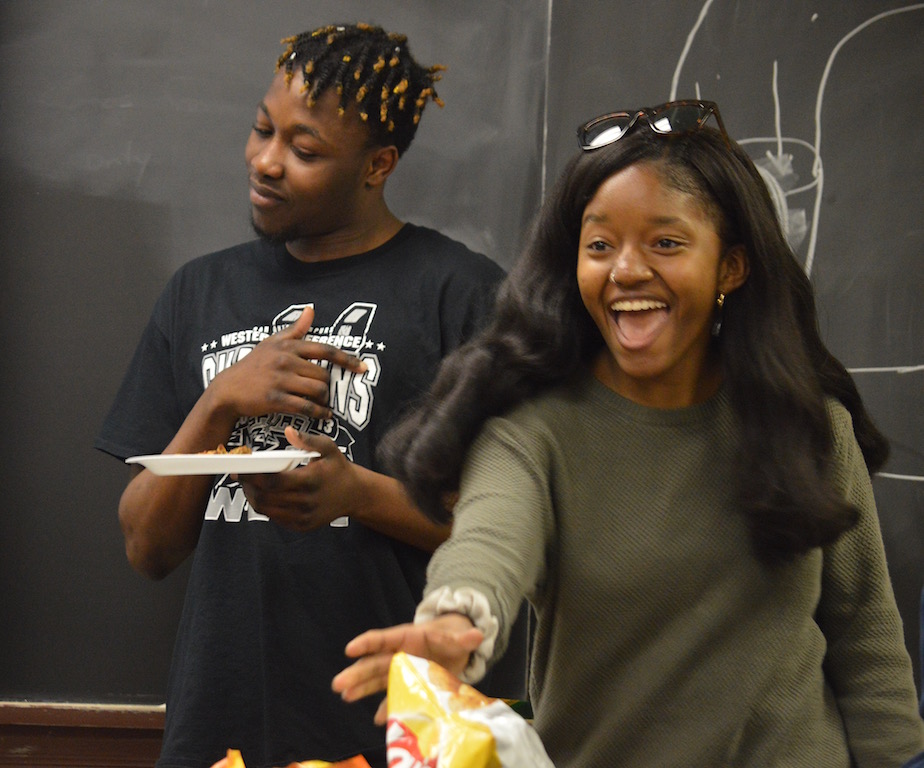
First-year student Joseph Miller breaking out into dance. The conclusion of the event turned the often glum Technological Institute into a space of “Black Joy”.


BridgeBuilders Foundation: Navigating the Black Experience at a PWI

After publishing “What You Should Know about the Black Experience at Northwestern University”, I was asked to create a short video for the BridgeBuilders Foundation detailing my experience at Northwestern University as well as giving advice to upcoming students at PWIs.

In this 10 minute video, not only do I detail my experience and struggles to an extent, but attempt to serve as a voice of support for upcoming students.

I have been asked a million and one times, “What is something I wish I knew before attending Northwestern?” and up until a few weeks ago I had no answer. My answer became eminent to me after my first spring break while attending Northwestern. While my peers literally traveled all around the world, I went home to Carson/ Wilmington , Calif. where I spent time with my loved ones and friends. It was during this time I realized that in order to get the most out of my experience at an institution that was not built for me or established with the idea that there would be students like me attending it, I must stop looking for myself and my home in everyone I encountered. This is not me attempting to fault my peers for the circumstances they live through, or even Northwestern for the circumstances it’s campus creates for students like me, but to acknowledge my daily struggles as I attempt to adjust to life away from home. I hate to be a race-baiter and even more a wealth- baiter,  but the elite socioeconomic culture here at NU is inseparable from my experience. An experience where I am not necessarily comfortable in many situations I find myself in on a daily basis.

So back to the point of advice, the central focus of this video. I advise all students of diverse backgrounds, who are going to elite and PWI institutions that’ll try to paint their campuses as “diverse”, to attempt to detach their home and what they’re used to culturally, from their experience and outlooks at these institutions. It is a completely different world for me, and many others, that must be adapted to until were able to make it our own.

YouTube video

Spotlight Series: Dre’es

It’s one thing to say you’re about it, but it’s another thing to actually be about it. Dre’es is about it. As a young rapper from Wilmington, Calif., Dre’es has already racked up considerable plays across many different streaming platforms, most notably Spotify. He prides himself on his artistic ability and the detail he puts into his craft, which has gained comparisons to the work of Tyler, the Creator and Earl Sweatshirt.

I was fortunate enough to sit down with Dre’es and talk with him about his newly released project When The Curls Grow, his opinion on the current rap game, his upbringing and influences, his hit song “Warm” featuring his little cousin Mia and so much more.

It is evident that Dre’es work and music has evolved simultaneously with his maturation as a person. His newest EP relays a soothing tone, while hitting the hard topics of maturation and self-reflection as one gets older. Dre’es does a great job of telling his own story through his music. A story that has not only cultivated the whole South Bay area of Southern California, but does an amazing job of putting on and showcasing his Wilmington/ San Pedro roots.

As you watch, I hope you grow to respect and support Dre’es as much as I do in not only his artistic element, but himself as a person.

Dre’es Interview on Youtube

Dre’es Contact:

Apple Music Spotify Soundcloud  Instagram