Tag Archives: Video

Uganda Week 4

Work Update

I left my home 31 days ago, began my research 25 days ago and today I finally collected my first bit of generalizable data, which somehow puts me right on schedule because that’s how it works here. Today, July 17, 2018, I held an introductory meeting with 18 newly elected Town Officials for the Bugembe Town Council, including the mayor and representatives from Uganda’s National Water and Sanitation Agency.

My goal was to leave with some sort of general knowledge, from those in power, on the waste management processes utilized by the Town Council. After spending 380,000 Ugandan Shillings just to get the government officials out of their respective offices to my meeting site (which was ironically outside next to a heap of unaccounted for waste), I was able to learn about the many issues that plague the five respective parishes of Bugembe. I administered a short questionnaire and held a focus group discussion for about an hour and a half with translation help from the Bugembe Town Council’s Primary Health Inspector.

Some of the more important pieces of information that I received through the Questionnaires & FGD can be found just below:

  • Solid waste is not collected in some areas
  • Bugembe Town Council suffers high influx of people (over 70,000 people coming in and out every day) and little is done to plan for their waste collection centers
  • Social indiscipline- People litter garbage carelessly without care about the environment (However I believe this is more to do with a lack of shared knowledge than “care”)
  • Poor roads have made some collection points inaccessible
  • Specialized equipment for garbage collection needed
  • Insufficient fuel for garbage collection
  • Only vendors are taxed for waste collection at 10,000 UG Shillings per year (less than $3 USD), but many can’t afford that
  • Bugembe Town Council’s waste management budget is 70,000,000 UG Shillings per year ($18,900 USD)
  • 30 Tons of waste generated per week by the Town Council


After being stagnant for the past 2 and a half weeks, this meeting, thankfully, put my work back into perspective for me. Towards the end of the meeting, one of the three English-speaking officials, called me out for exactly what I had been struggling with last week. What happens when I’m gone? But before I could answer, the Health Inspector stepped in and explained how important my work will be in helping the Town get funding from not only my NGO, but from other Ugandan and international organizations, and how it can serve as a stepping stone as the Town Council lobbies for policy change. It’s been hard to see the importance of my work these past few weeks, which in turn has made it hard to progress against a lot of the ailments in front of me, but my work can and should make a huge impact on the lives of 64,000 people. Hopefully, this momentum will help propel me through the next two and a half weeks of field work before my research paper and dissemination takes place.

Personal Update

For the first time in my life I feel identity-less. I have not forgotten who I am, and what makes me who I am, but my identity really doesn’t exist here. Yesterday, I was asked why I had hair like Ugandans by a Ugandan lady, who when I told her I was Black, didn’t believe me. My identity is something I’ve always had difficulty with, like a lot of people, but I never really questioned what I was until I got here. I’ve always seen myself as Black, but ironically, now more than ever, it’s obvious the effects of my heritage and lineage being stolen from me.

Since I got to college, colorism has been a topic that I have been unable to evade, for valid reasons. In the Black community, being lighter skinned is often looked down upon because we are closer to what is accepted by society and thus afforded privileges that many darker skinned Black people in America don’t receive. I acknowledge this is true, but as someone who does not identify as light or dark skin, I often feel lost in the debate.

In America, I’ve never been seen as anything but Black, so I find it hard to acknowledge these said privileges for myself, although some might feel differently. But here, I’m seen as literally nothing. I have been asked if I was East Asian and even Chinese (I know), but besides that most people are stumped.

This whole experience has made me more aware of how complex Blackness is throughout the world. It is something that is challenged differently everywhere and is not necessarily unique to Blackness, but it is definitely more intense with Blackness.

My last point is unrelated, but today I found out I made more money to be here for 65 days than half of my host organization makes in a year. Capitalism is trash and will always be unfair and unethical. See you next week?


Developing Community within the Black community at Northwestern University


Is there a singular Black experience at NU?

A generic  placeholder image

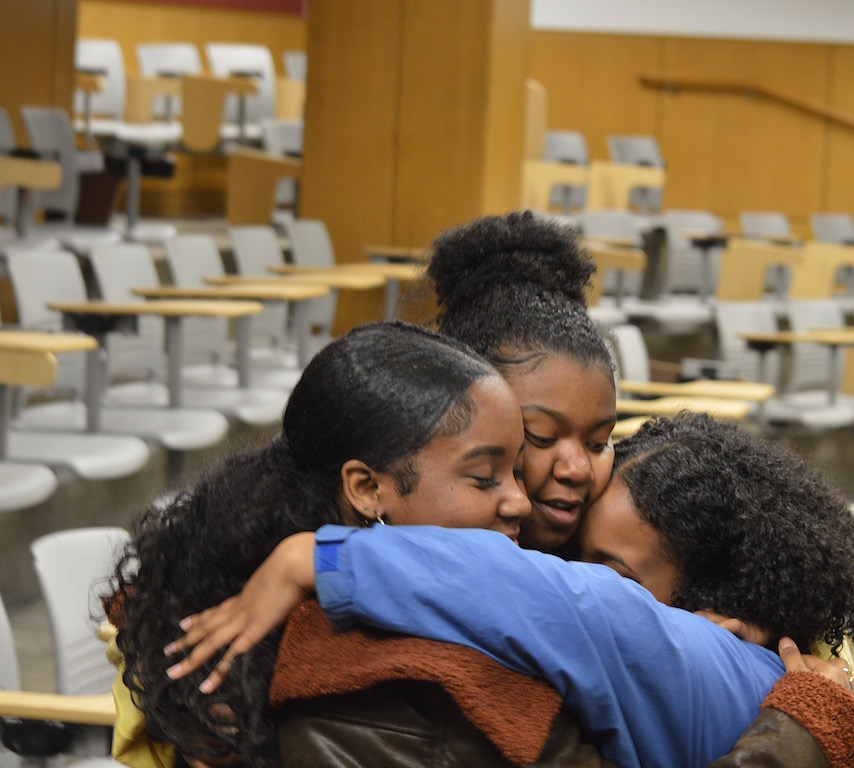
First-year students Symone Jackson, Sannah Boyd and Salina Tsegai embrace in a group hug, on April 24, 2018, inside of Northwestern University’s Technological Institute. Although the event,”Real Talk: Fragmentation in the Black Community”, was meant to highlight the issues within the Black community at NU, it turned into a space for Black students to highlight their “blackness” and support for each other.

“Real Talk” is a series of dialogues hosted by FMO’s first-year executive board. This event,”Real Talk: Fragmentation in the Black Community”, was an opportunity to dialogue about the various divisions and fragments in the Black community at Northwestern.

Our Black is Beautiful!


Mari Gashaw, Freshman Executive Board

A generic  placeholder image

“Real Talk” board members Nelson Okunlola and Taylor Bolding engage with the growing crowd before the room change. The event was planned by the Freshman Executive Board of NU’s Black student alliance “For Members Only” and was initially held in a small classroom before being moved to a bigger venue in Lecture Room 2.

A generic  placeholder image

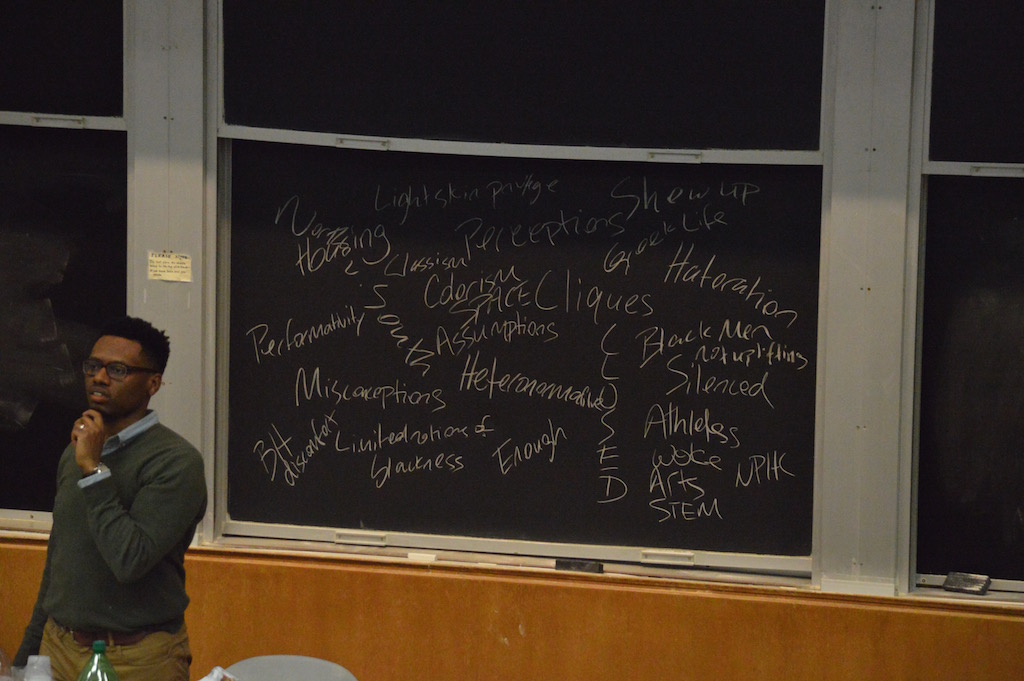
After the room change, facilitator Robert Brown, Director of Social Justice Education at Northwestern University, begins an exercise meant to establish the issues (listed behind him) within the Black community at NU.

This “Real Talk” event was meant to be a safe space for Black students to voice both their struggles and triumphs within the community, while featuring voices and identities that may be normally silenced on NU’s campus.

A generic  placeholder image
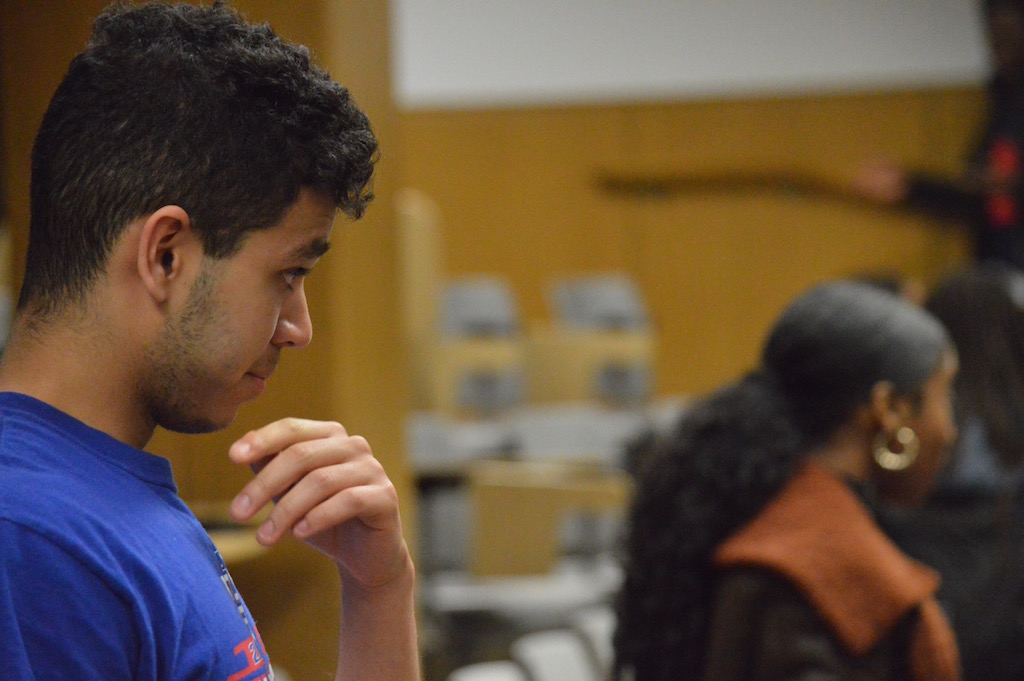
Rohan Gupta, a mixed-race first year student at NU, reflecting during one of the individual exercises of the night. For some students, this event served as a space for reflection, as they contemplated their personal experience within and outside of the Black community at NU.


A generic  placeholder image

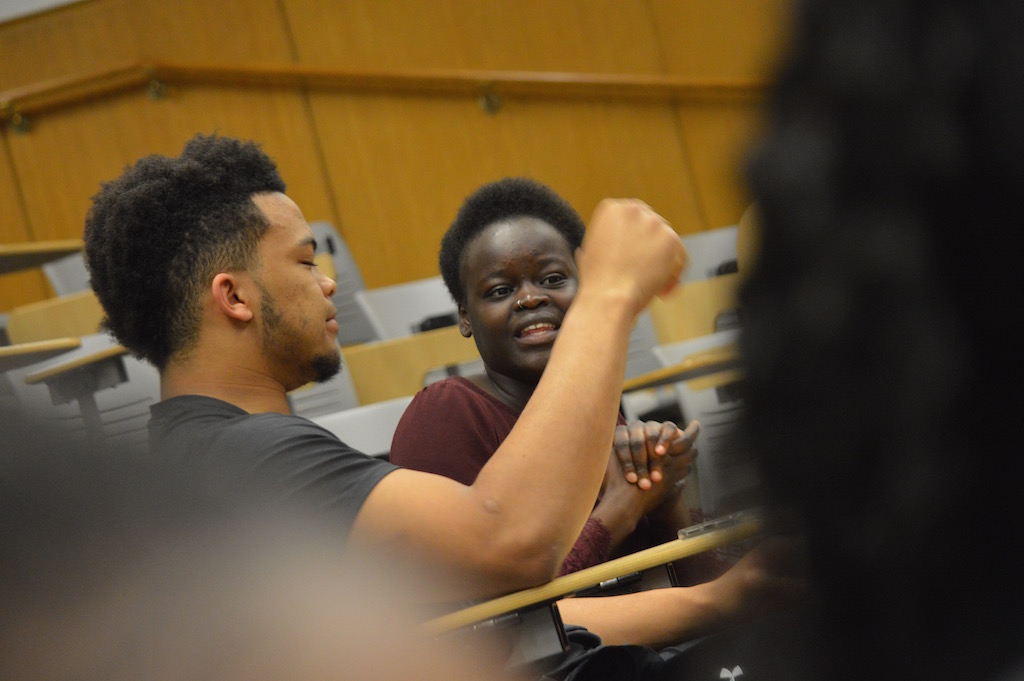
First-year student-athlete Earnest Brown and first-year student Emma Evans, are seen discussing the misconceptions found between Black student-athletes and non-athletes on campus.Students were able to voice their frustrations within the community to their peers.

A generic  placeholder image

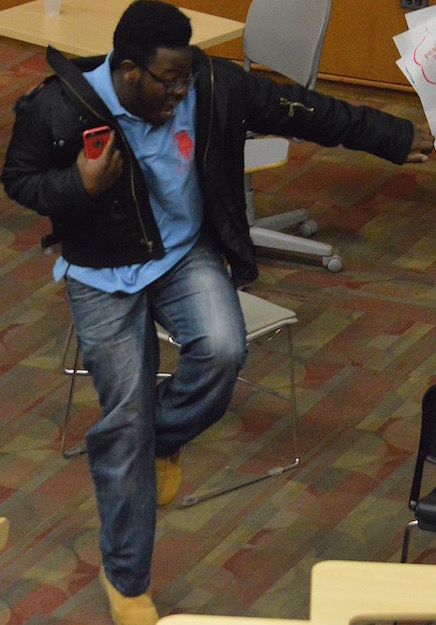
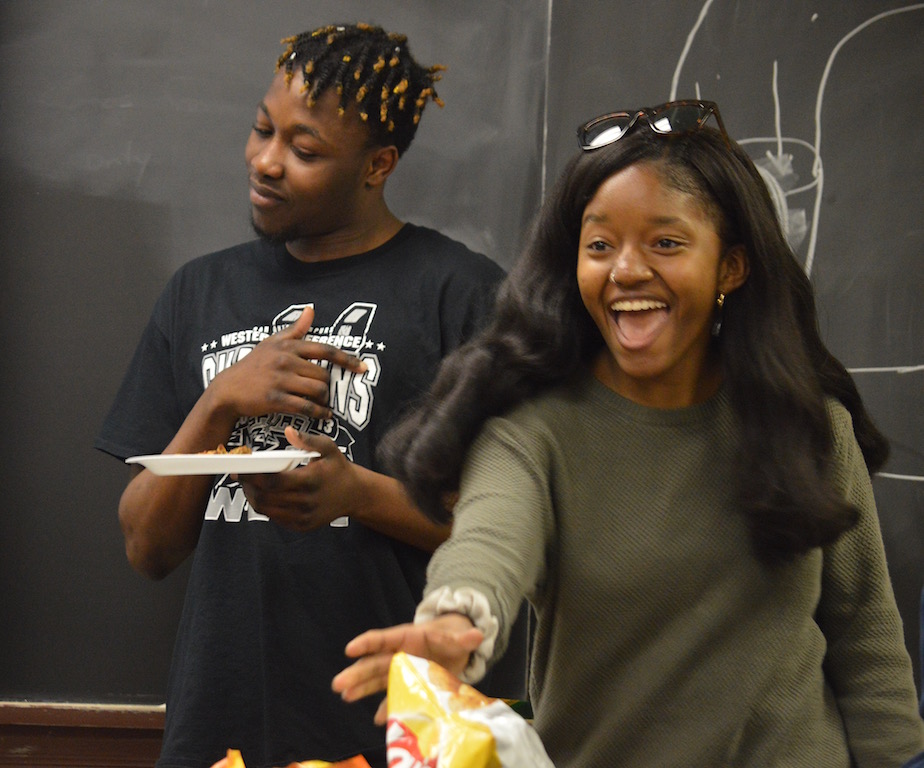
First-year student Joseph Miller breaking out into dance. The conclusion of the event turned the often glum Technological Institute into a space of “Black Joy”.


BridgeBuilders Foundation: Navigating the Black Experience at a PWI

After publishing “What You Should Know about the Black Experience at Northwestern University”, I was asked to create a short video for the BridgeBuilders Foundation detailing my experience at Northwestern University as well as giving advice to upcoming students at PWIs.

In this 10 minute video, not only do I detail my experience and struggles to an extent, but attempt to serve as a voice of support for upcoming students.

I have been asked a million and one times, “What is something I wish I knew before attending Northwestern?” and up until a few weeks ago I had no answer. My answer became eminent to me after my first spring break while attending Northwestern. While my peers literally traveled all around the world, I went home to Carson/ Wilmington , Calif. where I spent time with my loved ones and friends. It was during this time I realized that in order to get the most out of my experience at an institution that was not built for me or established with the idea that there would be students like me attending it, I must stop looking for myself and my home in everyone I encountered. This is not me attempting to fault my peers for the circumstances they live through, or even Northwestern for the circumstances it’s campus creates for students like me, but to acknowledge my daily struggles as I attempt to adjust to life away from home. I hate to be a race-baiter and even more a wealth- baiter,  but the elite socioeconomic culture here at NU is inseparable from my experience. An experience where I am not necessarily comfortable in many situations I find myself in on a daily basis.

So back to the point of advice, the central focus of this video. I advise all students of diverse backgrounds, who are going to elite and PWI institutions that’ll try to paint their campuses as “diverse”, to attempt to detach their home and what they’re used to culturally, from their experience and outlooks at these institutions. It is a completely different world for me, and many others, that must be adapted to until were able to make it our own.

YouTube video

Spotlight Series: Dre’es

It’s one thing to say you’re about it, but it’s another thing to actually be about it. Dre’es is about it. As a young rapper from Wilmington, Calif., Dre’es has already racked up considerable plays across many different streaming platforms, most notably Spotify. He prides himself on his artistic ability and the detail he puts into his craft, which has gained comparisons to the work of Tyler, the Creator and Earl Sweatshirt.

I was fortunate enough to sit down with Dre’es and talk with him about his newly released project When The Curls Grow, his opinion on the current rap game, his upbringing and influences, his hit song “Warm” featuring his little cousin Mia and so much more.

It is evident that Dre’es work and music has evolved simultaneously with his maturation as a person. His newest EP relays a soothing tone, while hitting the hard topics of maturation and self-reflection as one gets older. Dre’es does a great job of telling his own story through his music. A story that has not only cultivated the whole South Bay area of Southern California, but does an amazing job of putting on and showcasing his Wilmington/ San Pedro roots.

As you watch, I hope you grow to respect and support Dre’es as much as I do in not only his artistic element, but himself as a person.

Dre’es Interview on Youtube

Dre’es Contact:

Apple Music Spotify Soundcloud  Instagram